
Citizens Ballroom Wedding Photography
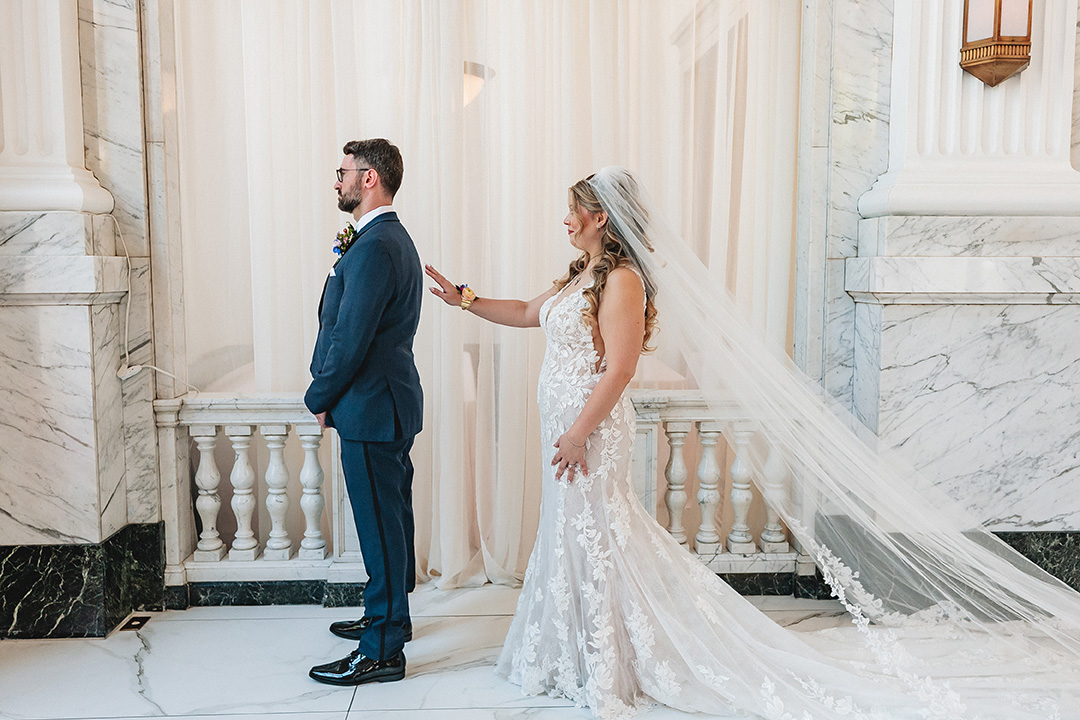
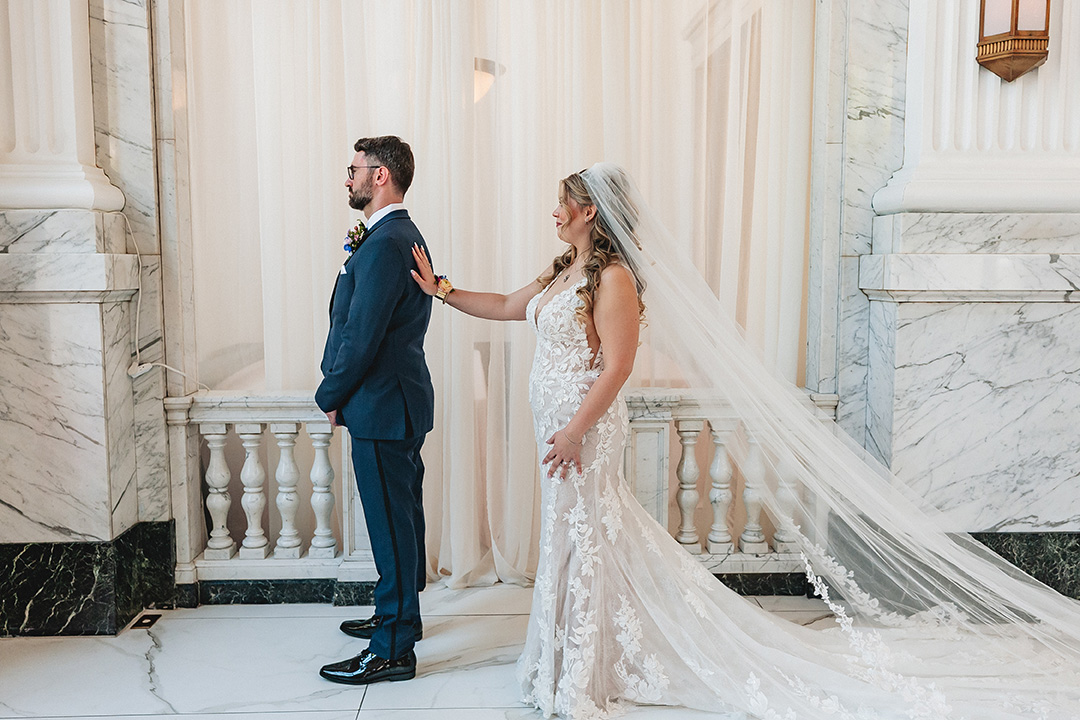
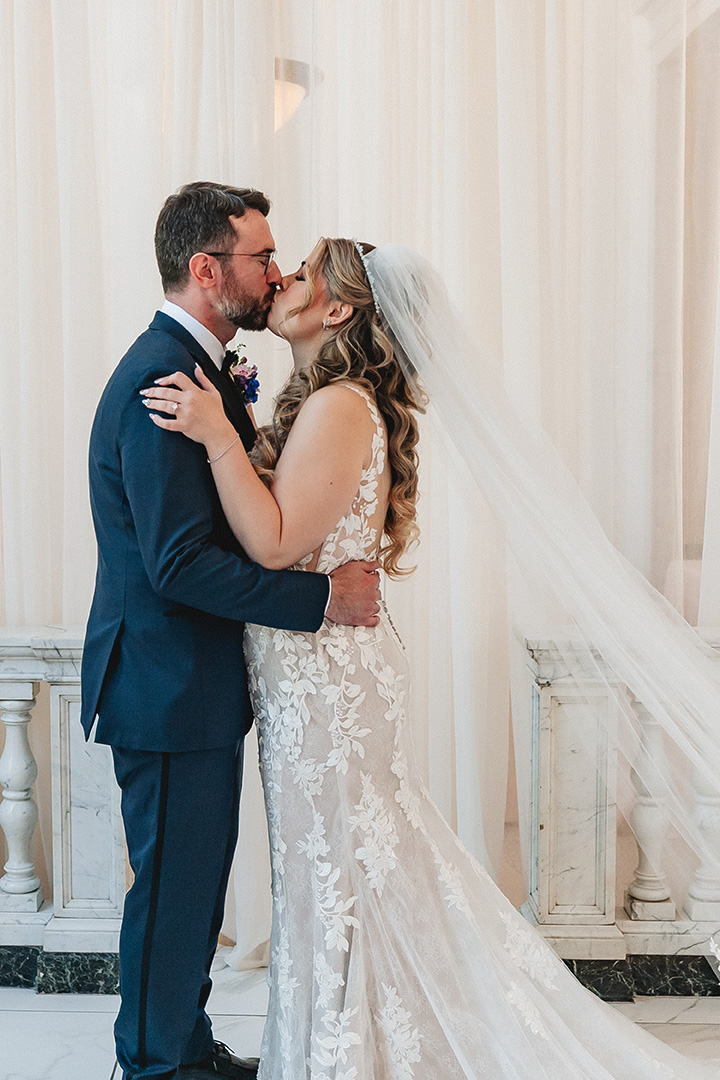
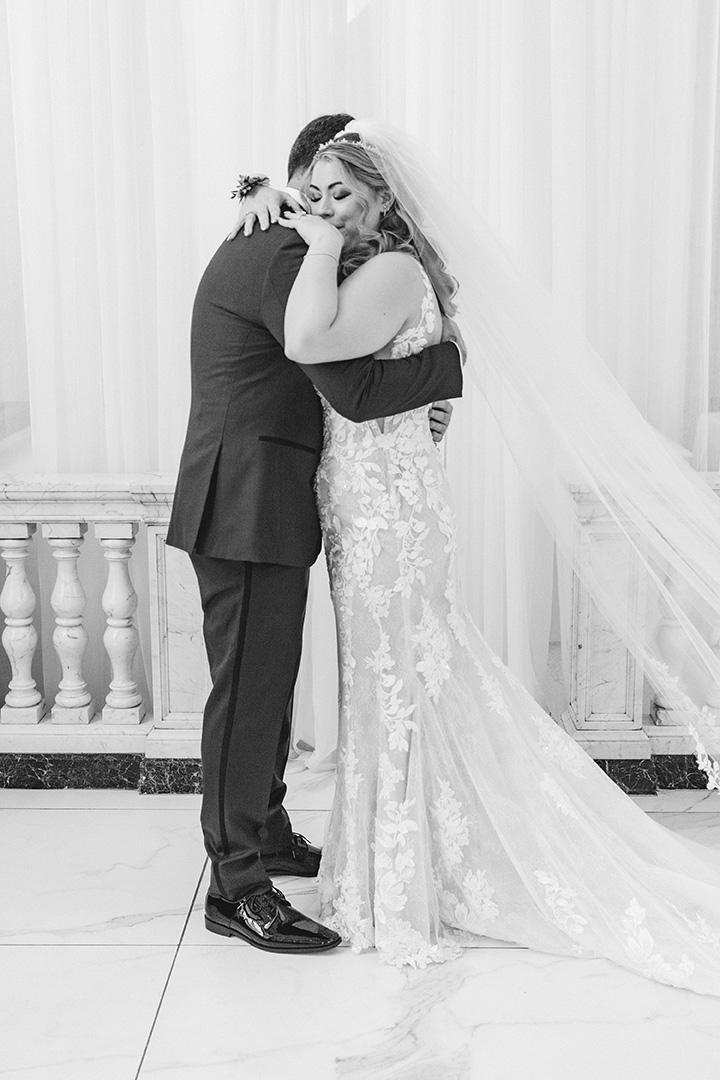
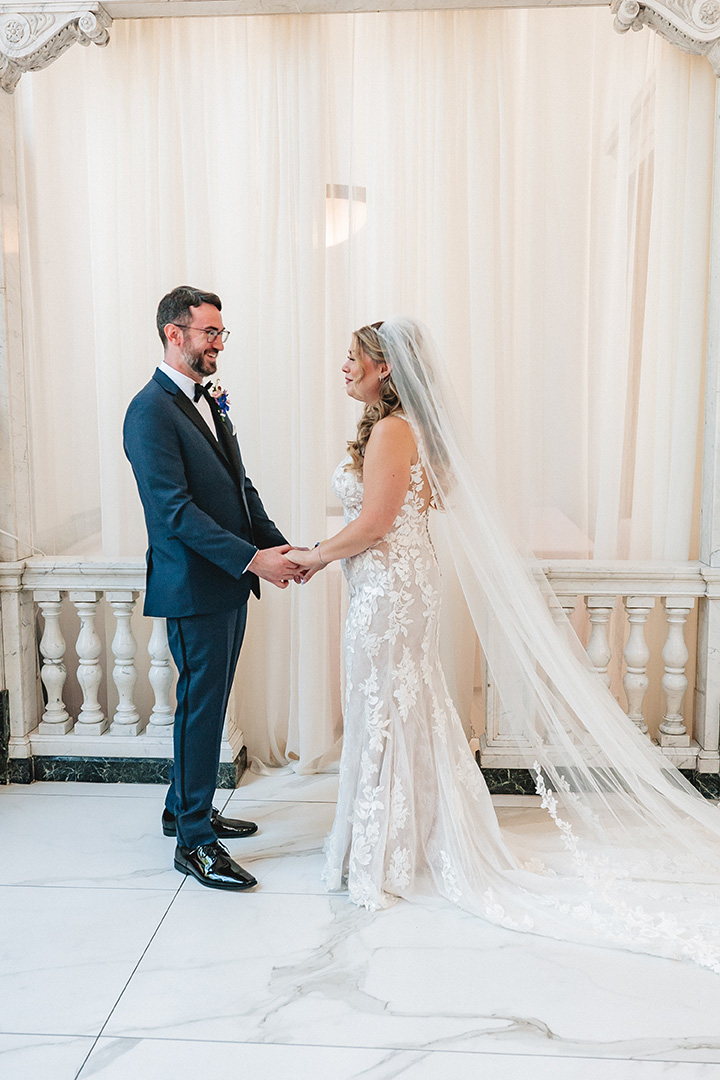
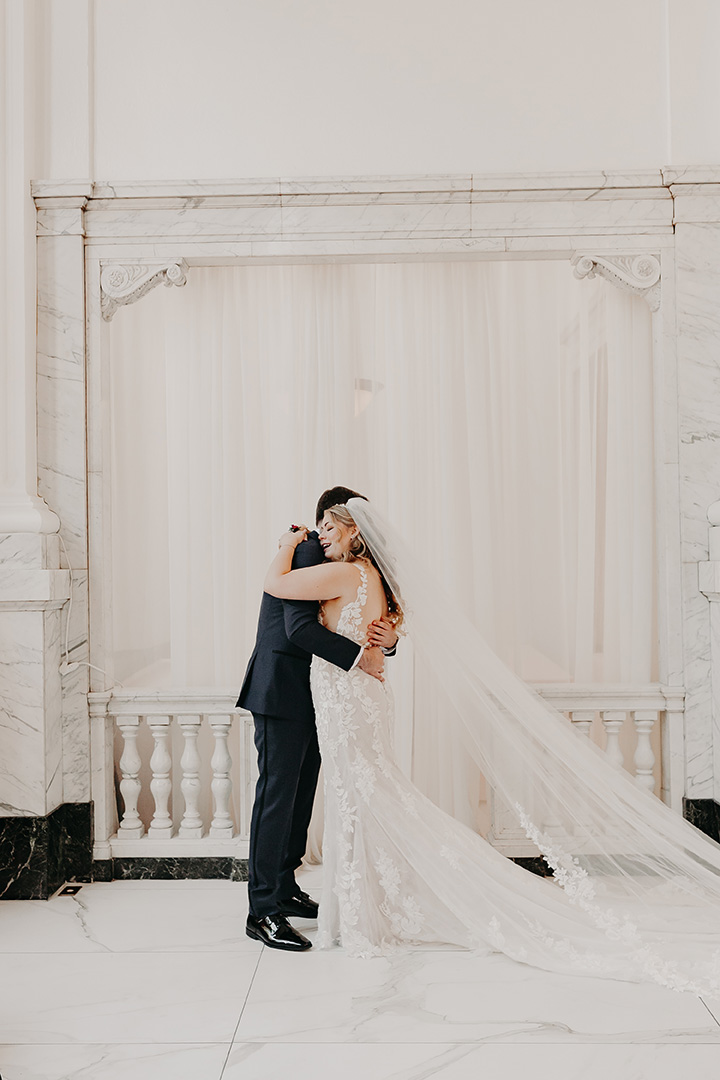
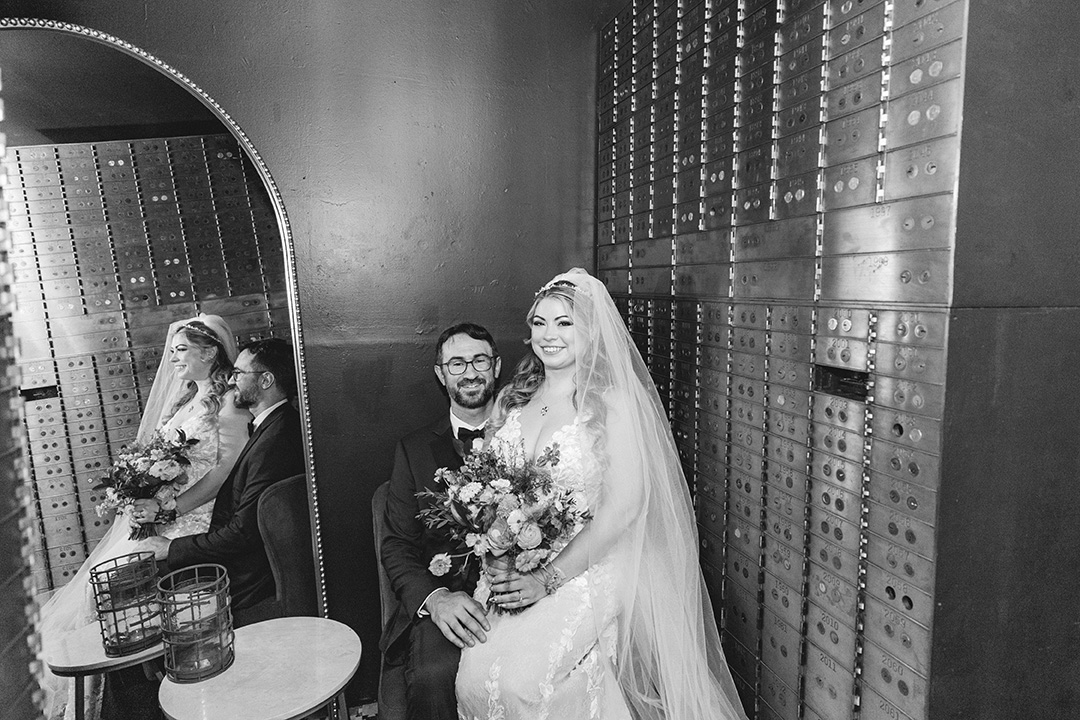
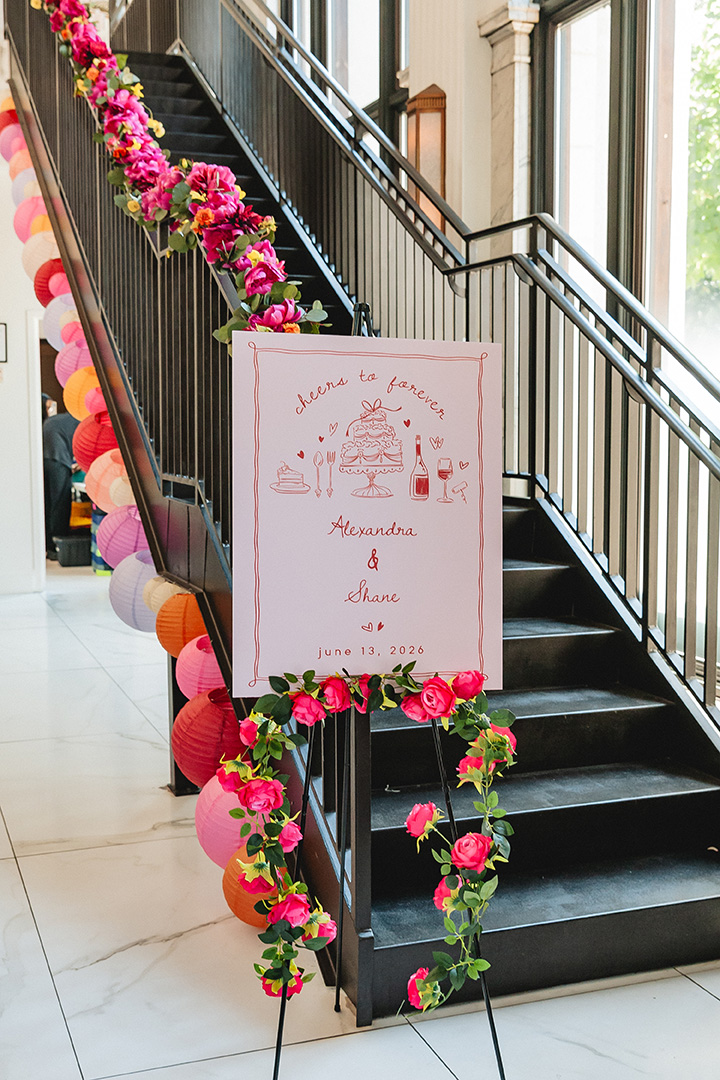
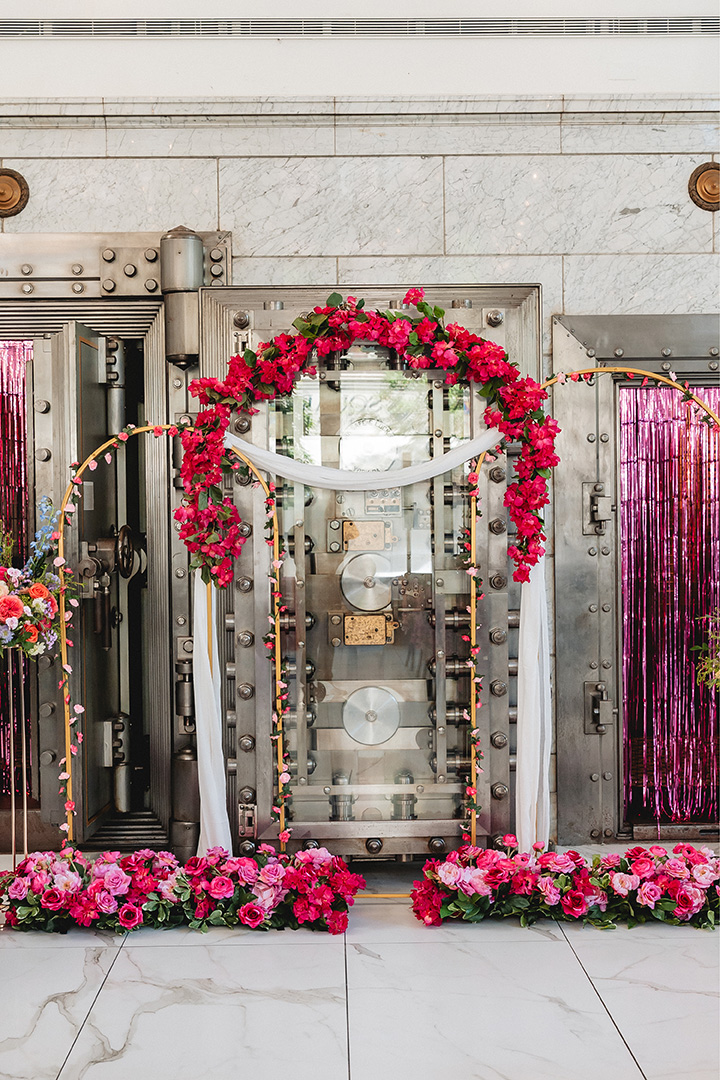
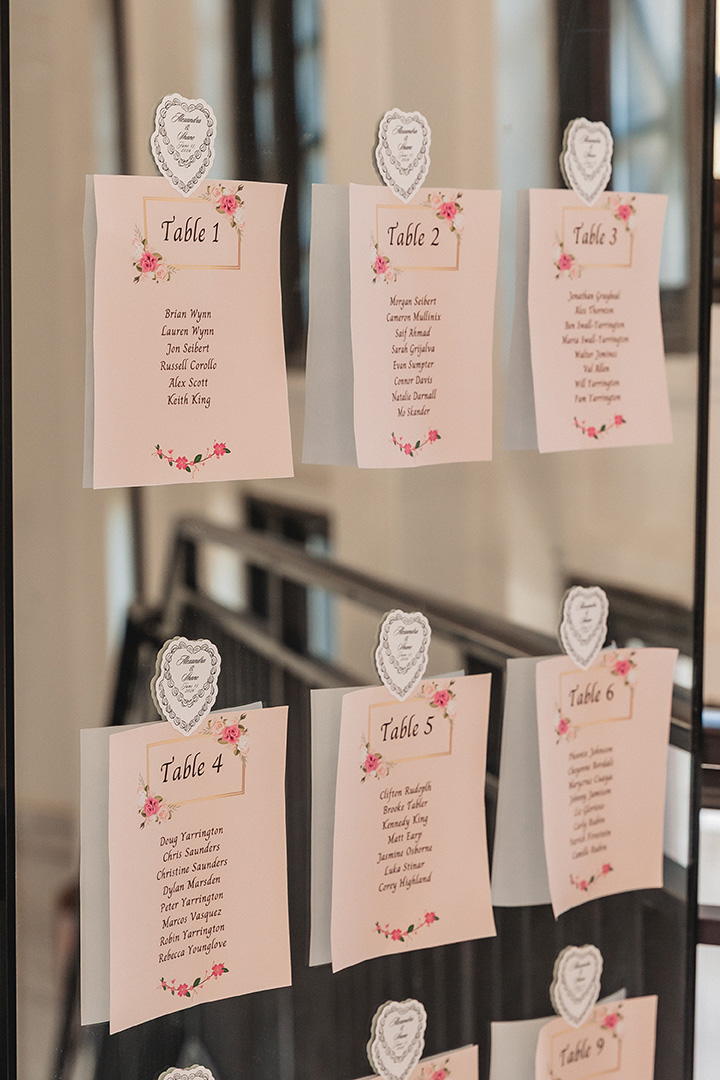
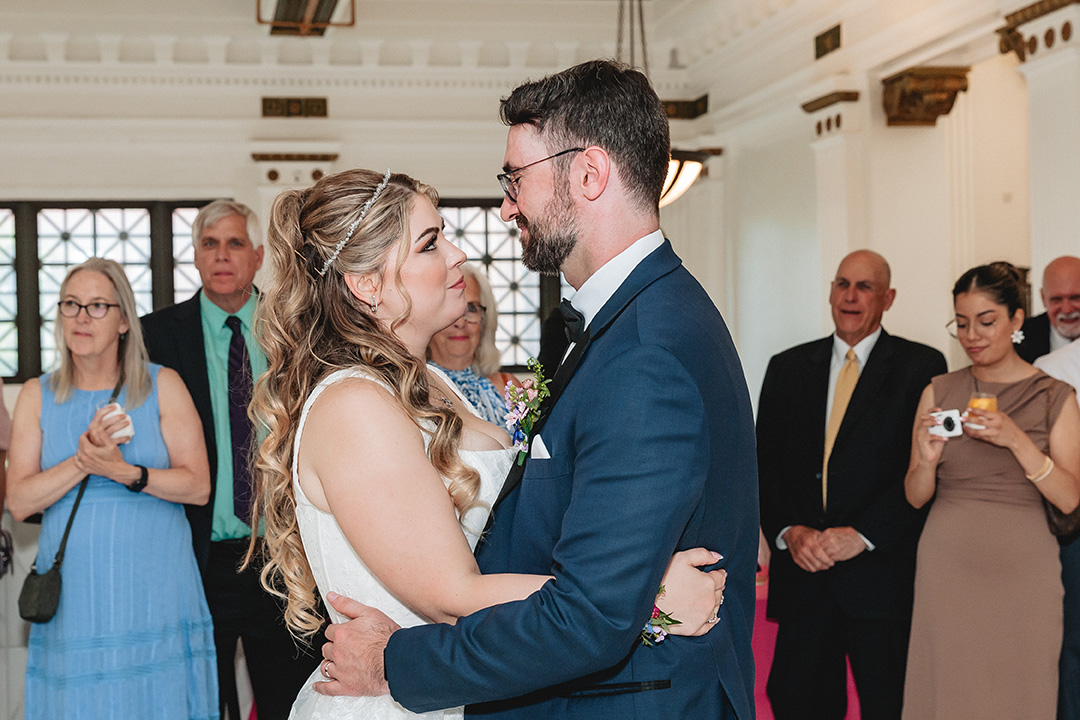
There is a moment we watch for every time we photograph here, and it happens before anyone has said a word about flowers or timelines. A couple pulls open the heavy bronze doors, steps out of the noise of the sidewalk, and stops. The ceiling is thirty feet above them. The floor is a mosaic of marble laid in 1908. Somewhere off to the side is a bank vault with its original door still swung open on its hinges. Nobody has to explain the room to them. They just look up.
That reaction is a big part of why we keep coming back to this building. When couples start touring Frederick, MD wedding venues, they usually see a lot of variations on the same few ideas — a barn with string lights, a country club ballroom, a garden with a tent. Then they walk into a Citizens Ballroom wedding venue tour and realize they have been looking at the wrong category the whole time. This is a restored 1908 bank in the middle of a walkable downtown, and it does not look like anything else in the county.
We are a studio of photographers who work all over Maryland, and this post is for the couple who just got engaged, has a spreadsheet open in another tab, and is trying to figure out whether this space is the one. We are going to walk through the building’s history, what the rooms actually look and feel like, how ceremonies work in a single-room venue, where the best photographs live, and how the seasons change your day here. Not a sales pitch — just what we have learned from working in this room.
The History Behind the Building
The building went up in 1908, and it was built to be a bank. That fact explains almost everything about how the space feels today. Banks of that era were not designed to be efficient. They were designed to be reassuring. A person walking in with their savings needed to feel, in their body, that this institution was not going anywhere. So the architects gave them height. They gave them stone and marble and bronze. They gave them a ceiling that made a person instinctively lower their voice.
That is the same instinct that makes the room work for a wedding. The proportions were engineered to produce a feeling of significance, and a ceremony is an event that benefits enormously from a room that already takes itself seriously. You are not fighting the space to make the moment feel weighty. The building did that work more than a century ago.
For decades it operated as a working bank on one of Frederick’s main commercial blocks — an anchor building on a street that has seen the city change shape around it several times over. Downtowns across the mid-Atlantic emptied out in the second half of the twentieth century and then, in a lot of cases, came back. Frederick came back better than most, and this building came along with it.
The transformation into an event space happened in 2021, and what we appreciate about that renovation is the restraint of it. It would have been easy to gut the interior, drywall over the character, and produce another neutral box. Instead, the original details were kept and brought back: the bronze doors at the entrance, the coffered ceilings, the marble mosaic underfoot, and the vaults themselves. The mechanical systems, the lighting, and everything a modern celebration needs were added around that history rather than on top of it. The result is a historic bank wedding venue where the age of the building is the feature, not the compromise you make to get it.
What that means practically is that the room reads as authentic on camera, which is not something you can fake with décor. There is a texture to genuinely old marble and genuinely old metal that reproduction materials never quite reach. A hundred and some years of foot traffic wore the floor in a particular way. Those small imperfections are what your photographs will pick up.
The location matters just as much as the architecture. This is a downtown Frederick wedding in the literal sense — you are on a real street, in a real neighborhood, with restaurants and shops and hotels within a short walk. Guests can come in the night before, have dinner nearby, walk back to their rooms, and never move a car. Very few venues in the region give you a genuinely historic wedding venue Maryland couples can reach on foot from a hotel lobby.
Inside the Space: What Citizens Ballroom Actually Looks Like
Let’s go through it the way we would if we were walking a tour with you.
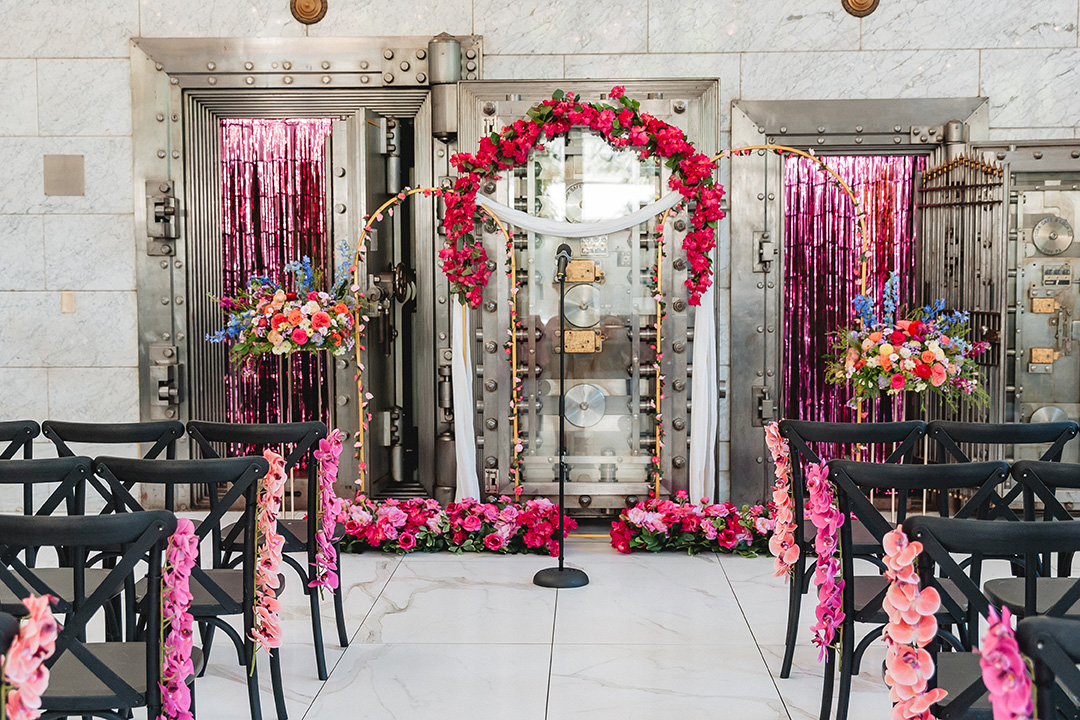
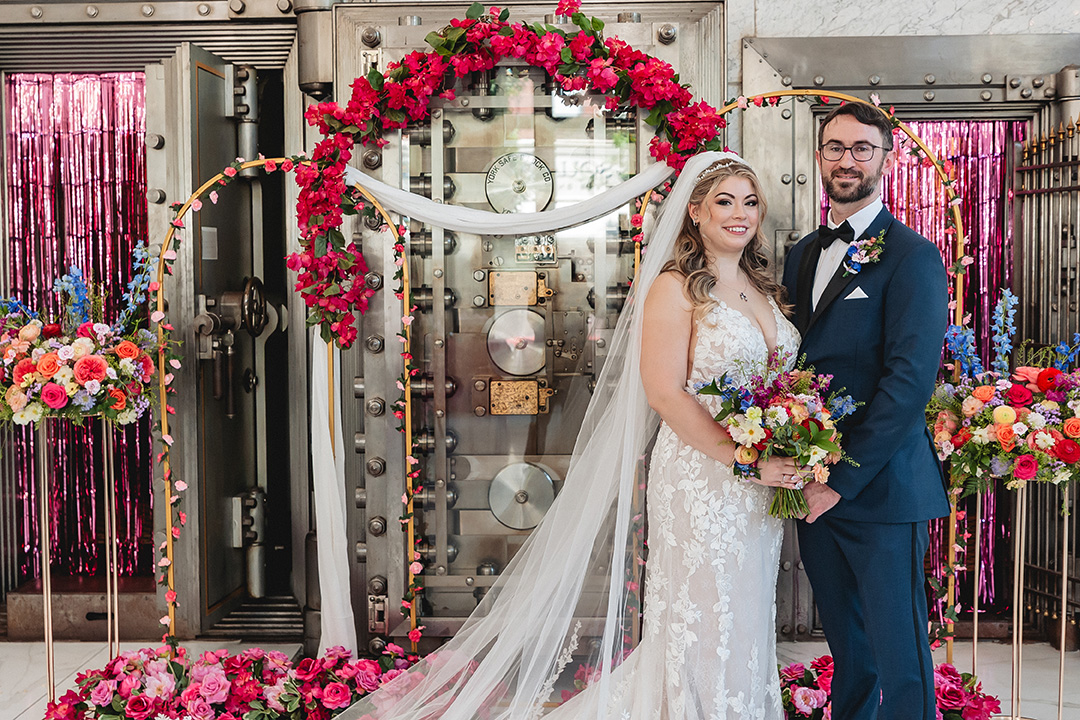
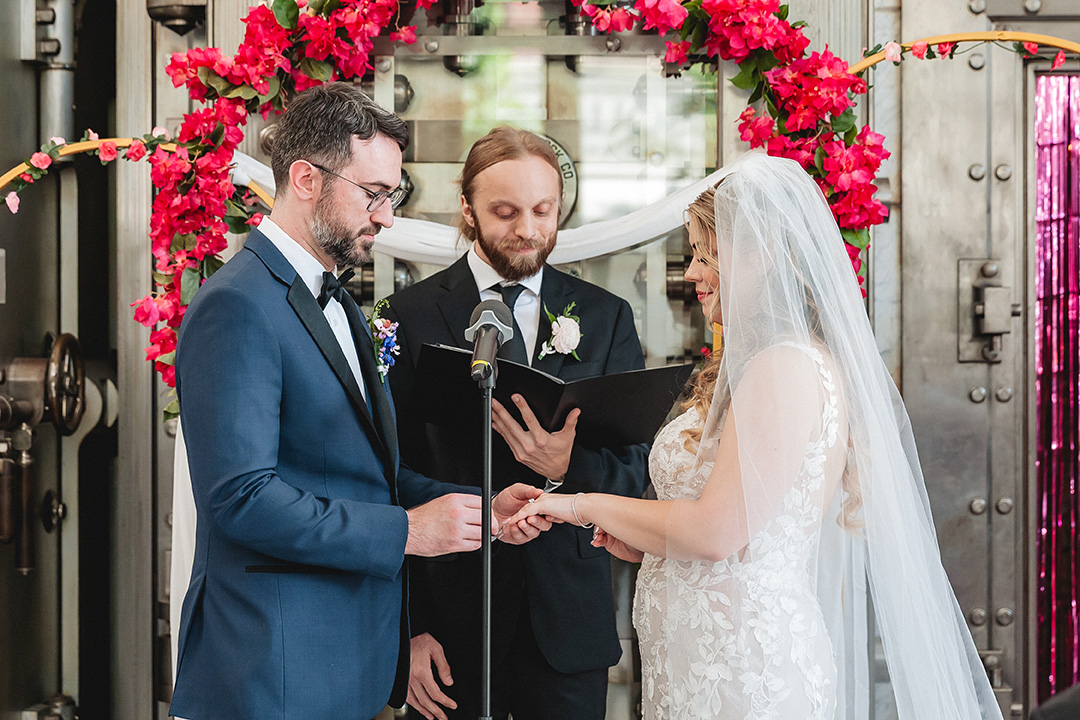
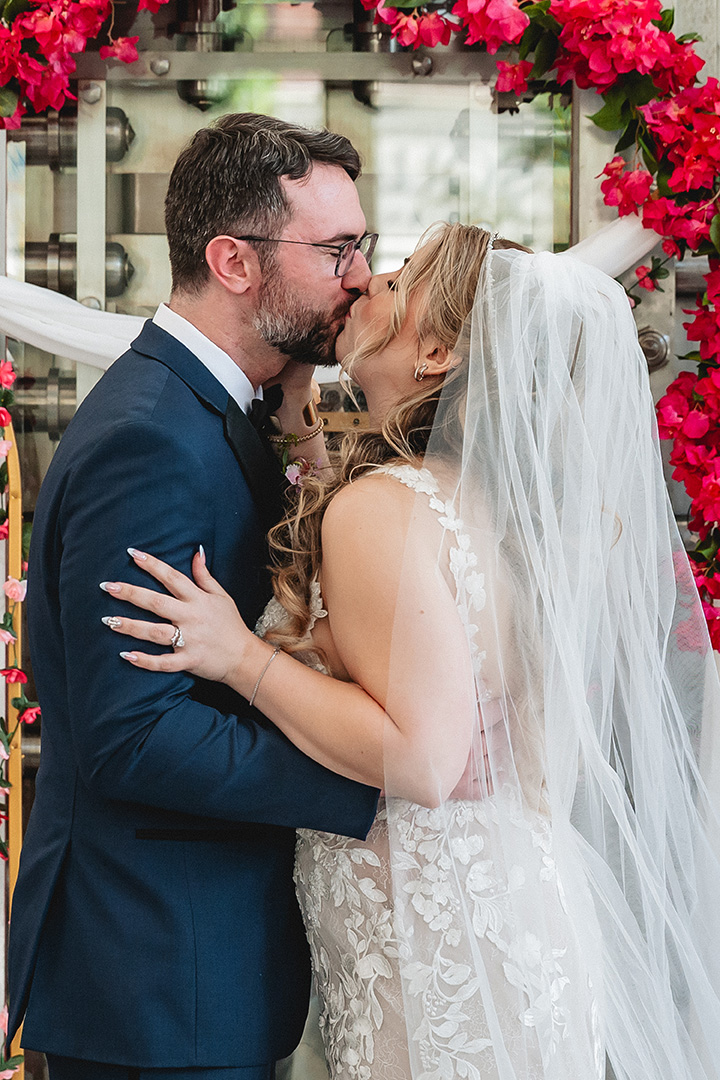
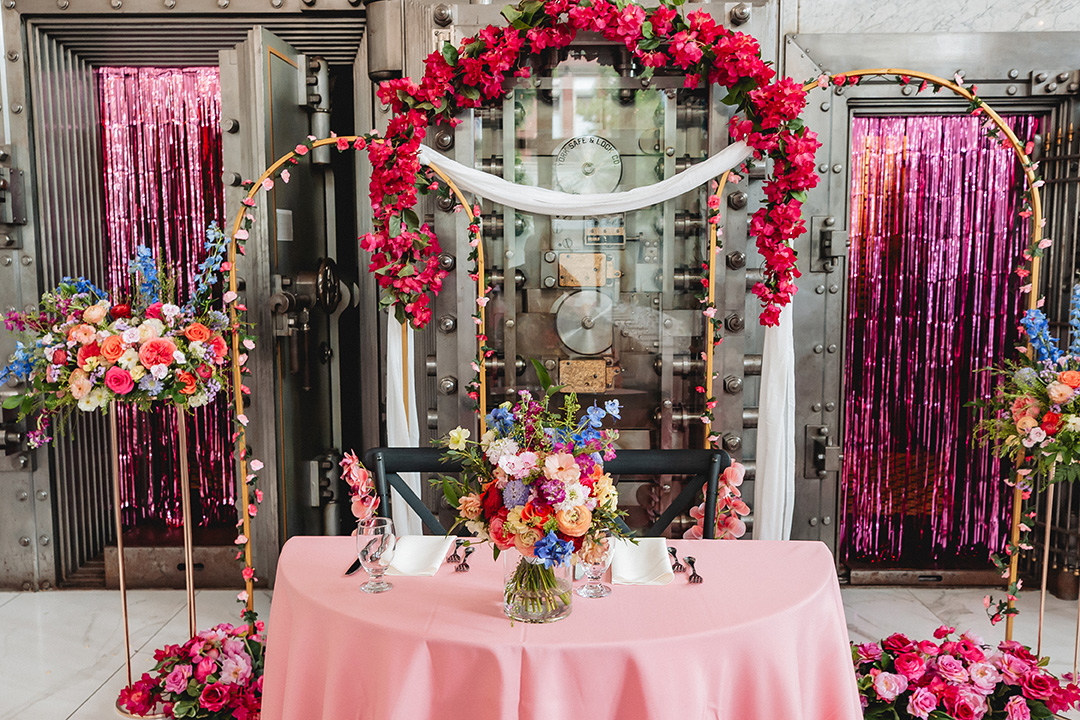
The main level is one large open room of roughly six thousand square feet. Your eye goes first to the vaults. They are the original bank vaults, restored, and they are much more interesting in person than photographs suggest — the door mechanisms alone have a mechanical intricacy that people stand and study. Couples use them constantly. We have photographed first looks staged around them, bars built into the alcoves, guest books and card tables tucked in, and more portraits than we can count with the vault door as the frame.
Underfoot is the 1908 marble mosaic tile, a small-scale pattern in muted tones that runs through the main floor. It is one of those details that does not announce itself in a wide photograph but becomes beautiful the moment you shoot down at a dress train or a pair of shoes.
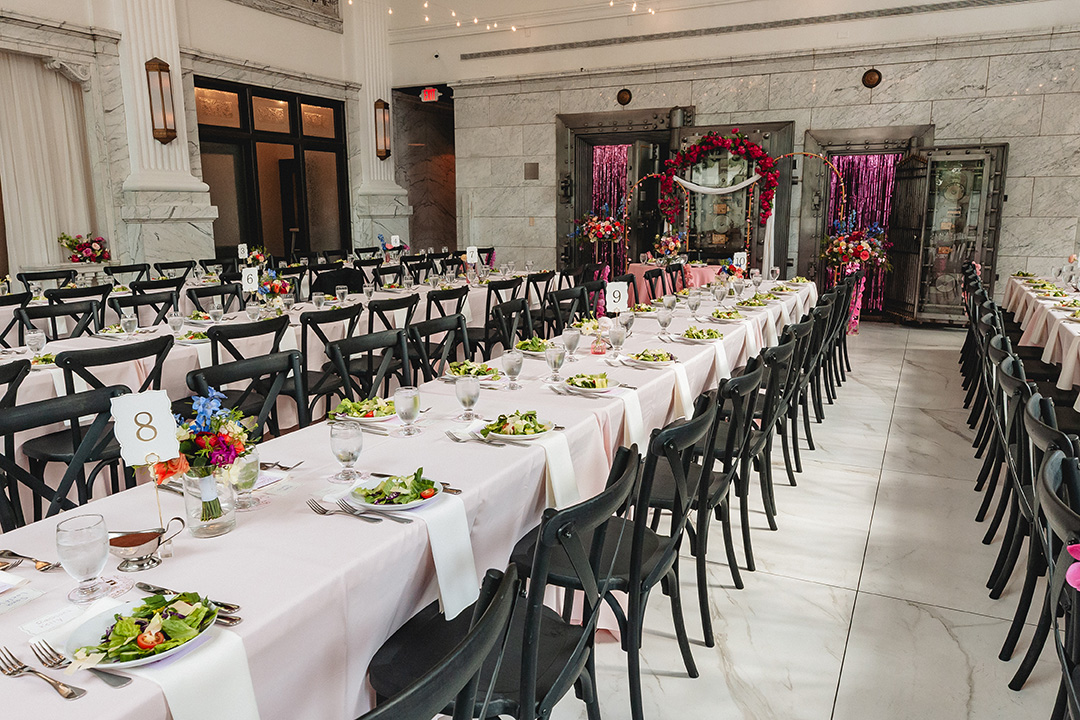
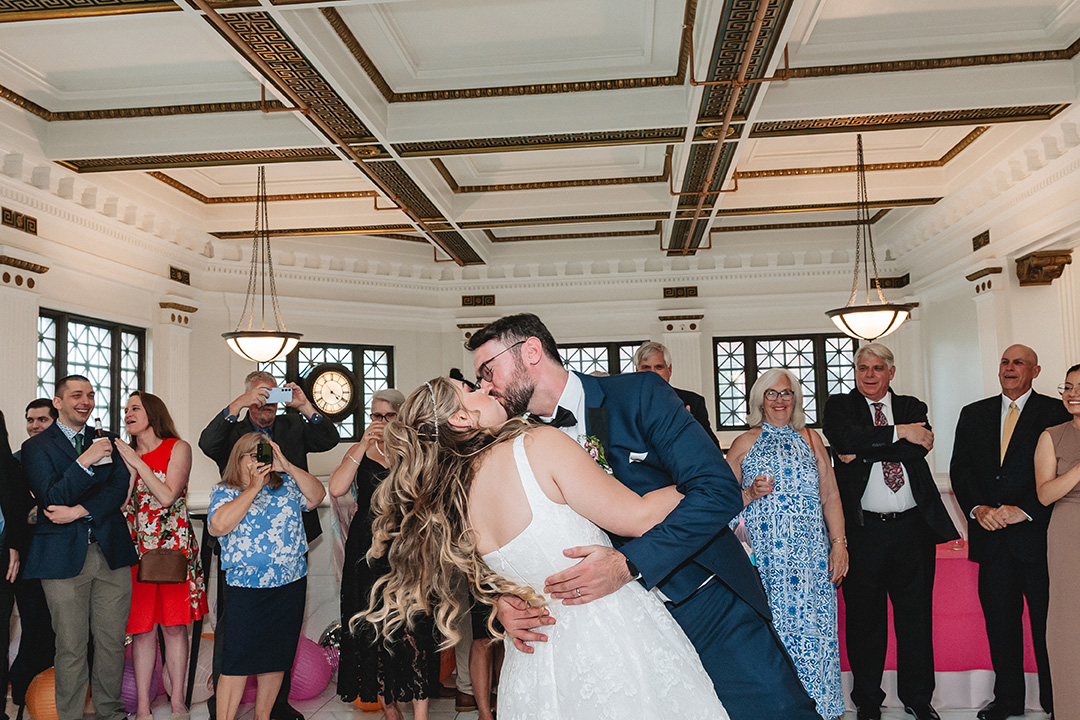
Above you are the coffered ceilings, thirty feet up. This is the single biggest difference between this space and almost every other option you are considering. Most reception rooms have ceilings in the nine- to twelve-foot range, and you feel that ceiling pressing down whether you consciously notice it or not. Thirty feet changes the physics of the room. Sound moves differently. Light moves differently. A room with two hundred people in it does not feel crowded, because all the extra volume is overhead. Tall floral installations and hanging elements that would look absurd elsewhere have room to breathe here.
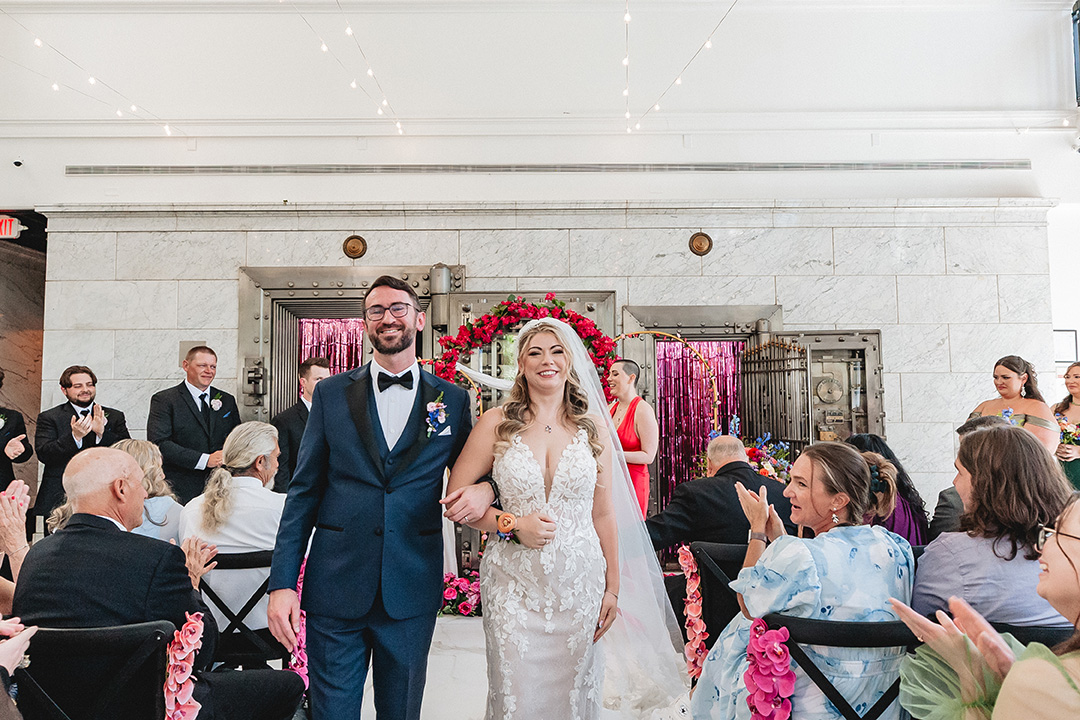
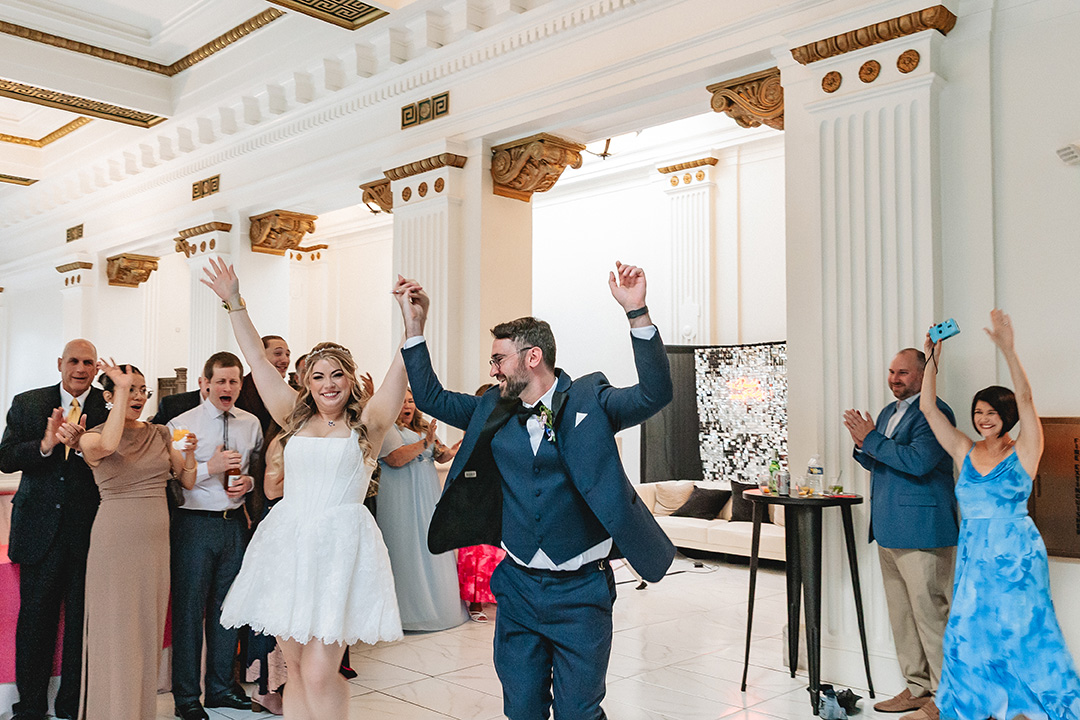
The bronze doors at the entry are worth a specific mention because we build photographs around them. They are substantial, warm-toned, and they frame a person beautifully. Exits, entrances, and portraits at the threshold all work here.
Then there is the staircase. It sweeps up from the main floor to the mezzanine level, and it is the kind of architectural gesture that photographers get slightly greedy about. It gives us height, it gives us leading lines, and it gives us a way to shoot the main floor from above during the reception.
Upstairs on the mezzanine you’ll find the dressing suite, skylights that bring daylight down into the upper level, and ornate ceiling detail that surprises people who assumed the drama was all on the ground floor. The dressing space is a genuine asset — getting ready in the same building where you are getting married removes an entire travel block from your timeline, and it means we can photograph the preparation without racing across town.
The overall palette runs white, black, and gold. That combination is doing something specific for you: it is neutral enough to accept almost any color story you bring, but it is not bland. A neutral gray box is easy to decorate and impossible to make memorable. This room already has a point of view, and your décor gets to be a conversation with it rather than a rescue mission. We have photographed weddings here with deep jewel florals, with all-white minimalism, with black and gold Art Deco styling, and with soft blush and greenery. Every one of them looked like it belonged. That flexibility is the practical case for choosing a Maryland ballroom wedding venue with real architecture over a blank hall — the room adapts to you instead of requiring you to fill it.
On capacity: the space seats up to two hundred guests, with tables and chairs included. Two hundred is the ceiling, not the ideal, and it is worth being honest about what different guest counts feel like in here. At a hundred and twenty to a hundred and sixty, the room feels generous — comfortable spacing, an easy dance floor, room to move around the bar. At two hundred, you are using the space fully, and the floor plan needs real planning. At sixty or eighty, the height gives you an intimate-but-grand feeling that smaller rooms cannot produce; the guests cluster, and the architecture rises up around them. We have shot at all of those scales here, and none of them felt wrong; they just felt different.
Ceremony Options at Citizens Ballroom
This is a fully indoor, single-room venue, and that shapes your ceremony planning more than any other single factor. It is not a limitation so much as a set of decisions that get made earlier than they would elsewhere.
The first decision is your ceremony backdrop, and you have three strong options.
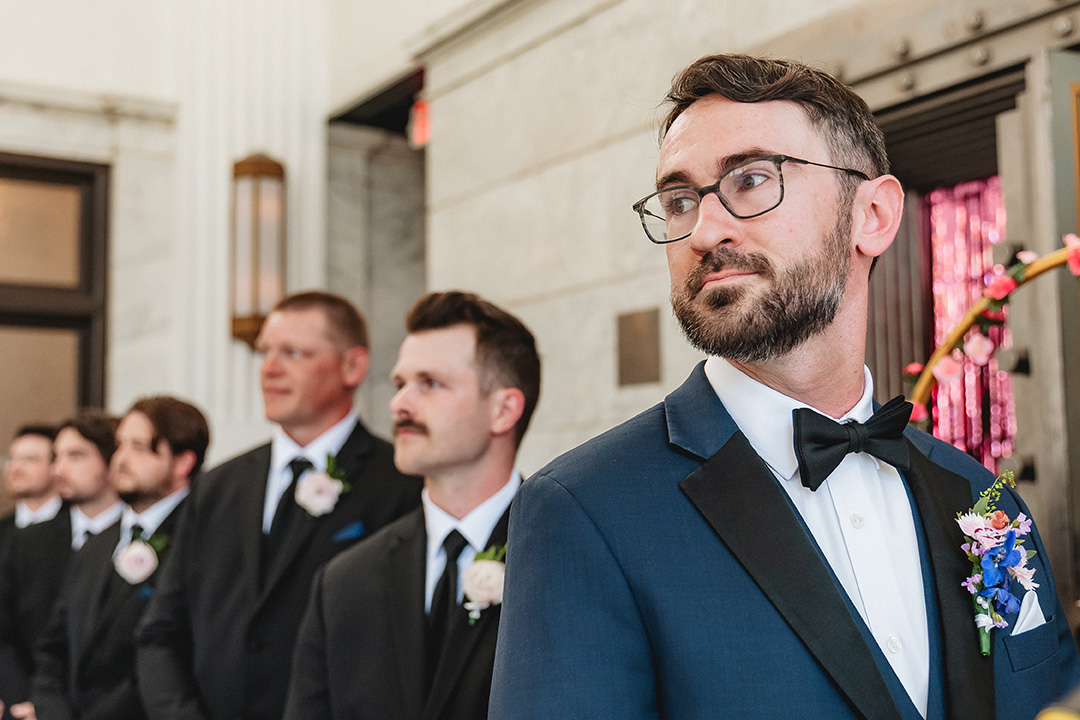
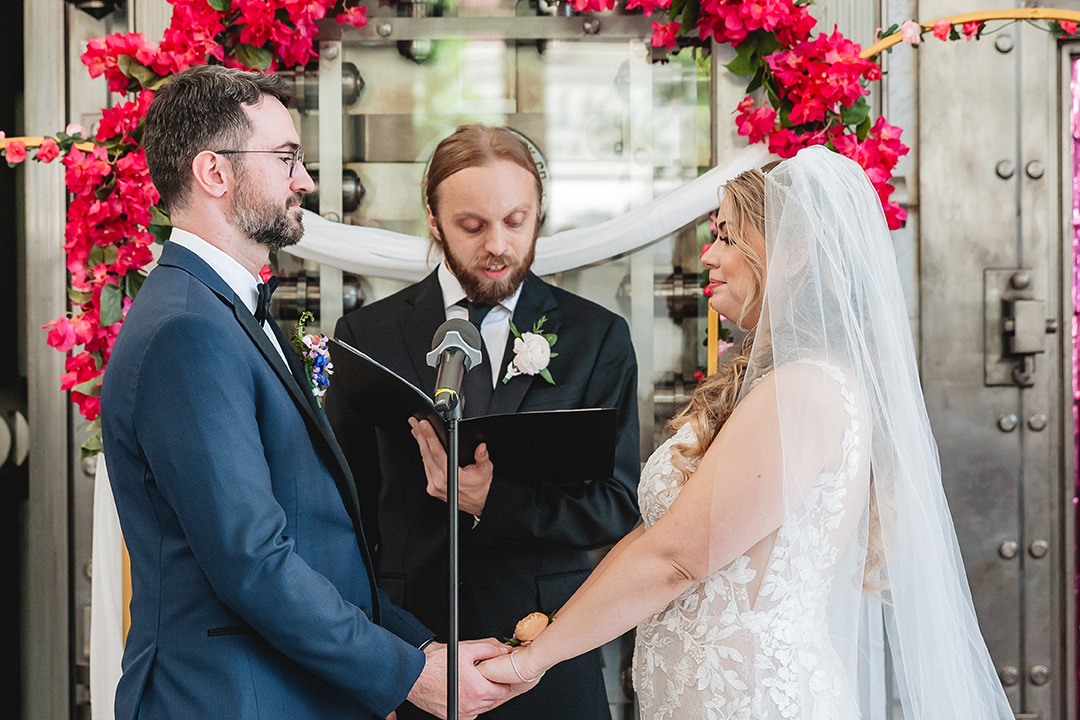
Facing the vaults is the choice that leans hardest into the building’s identity. Your guests see the vault doors behind you for the entire ceremony, and every wide photograph of your vows carries the architecture that made you choose this place. It is the most distinctive option, and it photographs unmistakably.
Facing the staircase gives you a different kind of drama — verticality, a sweeping curve behind you, and the mezzanine above as a second layer. It also opens up an entrance option we’ll come back to in a moment.
Facing a clear wall or a draped backdrop is the quietest option, and some couples want that. If you are bringing a floral arch or an installation you have been planning for a year, a simpler background lets it be the star. There is nothing wrong with letting the room be the container rather than the subject for those fifteen minutes.
Aisle length and seating are the next decision. In a room this shape, you can run the aisle along the long axis for a longer, more processional walk, or across the shorter axis for a wider, shallower seating arrangement that puts more guests in the front rows. We usually nudge couples toward the wider arrangement when the guest count is high, because in a deep arrangement the back rows are genuinely far from you. Sightlines are excellent here — no structural columns are chopping up the middle of the room — but distance still matters.
The chairs themselves are worth thinking about. With ceilings this high, low seating leaves a lot of empty visual space in a wide photograph. Couples who add an aisle treatment, floor arrangements, or a few tall elements along the aisle give the frame something to hold onto between the guests and the ceiling.
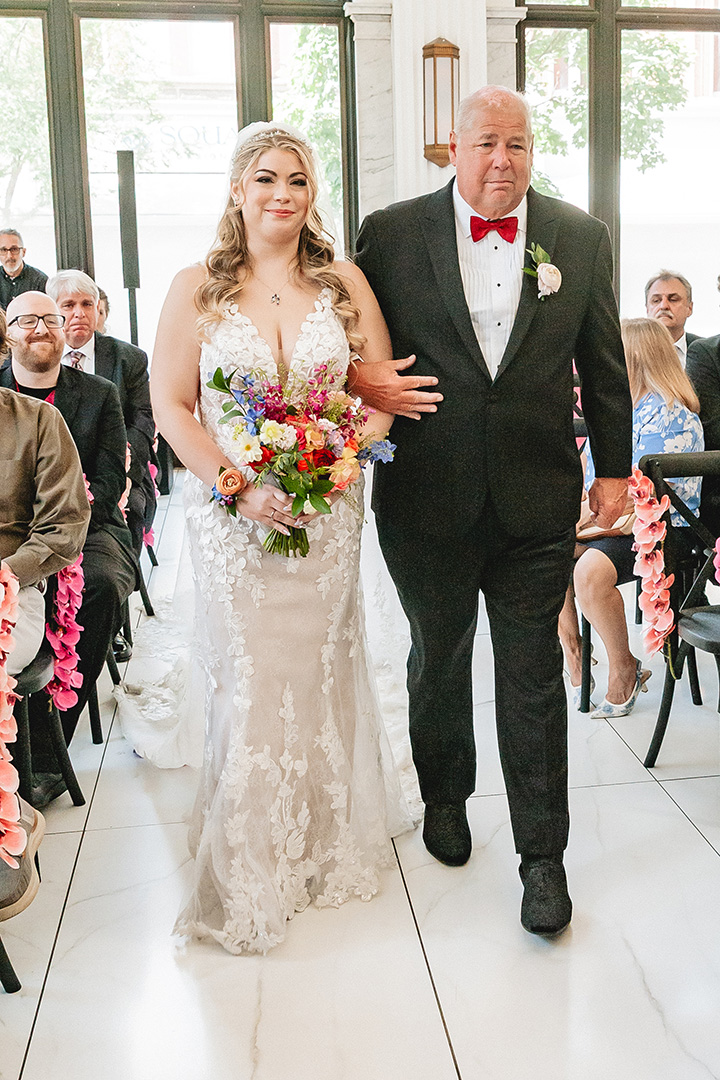
Processional options are where the mezzanine becomes fun. Coming down the staircase is an entrance most venues cannot offer, and if you want it, it is worth deciding early, because it changes where we position, where your guests face, and where your officiant stands. It also gives us the chance to photograph you from above as you begin, then from below as you arrive — two completely different frames from a single walk. Not every couple wants that much theater, and a simple entrance through the main floor is just as lovely. But the option exists and it is a good one.
Now, the flip. Because this is one room, your ceremony space is also your reception space, and someone has to turn one into the other while your guests are still in the building. This is the single most important logistical conversation to have with your planner and your venue contact, and the answers vary by how you have laid out the room.
A few realities to plan around. A flip takes time — plan for something in the range of forty-five minutes to an hour and a quarter depending on how much has to change and how many hands are working. Your guests need somewhere to be during it, which usually means cocktail hour is staged in a portion of the space that does not need to be reset, or on the mezzanine level, or split between the two. And your vendors need the ceremony to end on schedule, because every minute of delay comes out of the flip, not out of dinner.
The good news is that the extended rental window this venue offers takes a lot of pressure off the setup and breakdown ends of the day. The flip itself still has to happen in real time, but the hours around it are far less compressed than at venues that hand you the keys four hours before your ceremony.
The other thing we’ll say about the flip is that it produces a genuinely good moment. Guests come back into a room they have already seen, and it has become something else — candles lit, tables set, the whole floor transformed into an elegant ballroom wedding reception under those enormous ceilings. That second reveal is worth photographing, and we always try to be positioned for the faces as people walk back in.
Finally, small weddings. This space works beautifully for intimate ceremonies and elopements, and we want to make that case because couples sometimes assume a two-hundred-person room needs two hundred people in it. It does not. A ceremony of thirty in a room this tall has a particular quality — the smallness of the group against the scale of the architecture actually intensifies the intimacy rather than diluting it. Some of our favorite photographs from this building came from very small days.
Photographing a Wedding at Citizens Ballroom
This is the part we can speak to with the most authority, so we are going to be specific.
When we scout a venue as a Citizens Ballroom wedding photographer team, we are building a mental map of every place a photograph can happen, and here that map fills up fast. These are the spots we return to.
The vaults, inside and out. The exterior of the vault door — with its wheel, its hinges, its layered metal — is the signature frame of this building. We shoot couples standing in the open doorway, leaning against the frame, walking through it. The interior of the vault is a different tool entirely: it is a small, enclosed, hard-edged space, and if there is any light we can get into it, the contrast is dramatic in a way nothing else in the building offers. We have made portraits in there that look like they came from a different wedding altogether. It is also a genuinely good spot for ring and detail shots, because the metal textures give you a backdrop with real character.
The staircase. We use it three ways. Standing on it, for portraits with the curve of the railing leading the eye. Shooting from the top of it, to compress the main floor and catch the ceiling in the same frame. And shooting up it from the floor, which flatters almost everyone and makes a dress do interesting things on the steps.
The mezzanine overlook. This is our reception vantage point. From up there we can photograph the entire floor at once — the tables, the dancing, the scale of the room — and produce the wide establishing frames that let you remember what the whole thing looked like. Most venues do not offer a legal, safe, elevated position with a clear view of the floor. This one does, and we use it during the first dance, during toasts, and once the dance floor fills.
The marble floor. Shooting straight down at the mosaic with a dress spread across it, or shooting low with the pattern running toward the couple, uses a detail most people walk over without noticing. It also gives us a frame that could only have been made in this building.
The bronze doors. Entrances, exits, and portraits framed in the doorway with the street light behind. If you are doing a sparkler exit or a farewell moment, this is where it happens, and the transition from the interior warmth to the outdoor light gives us a natural drama we do not have to manufacture.
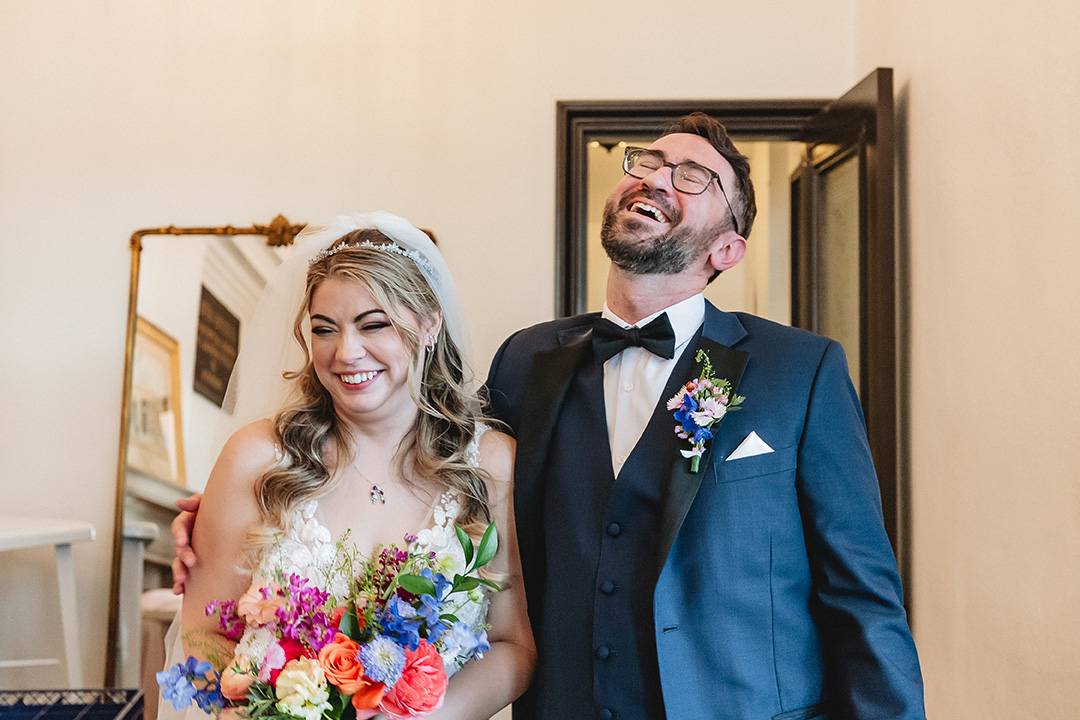
The mezzanine dressing suite. Skylit, quieter than the main floor, and the natural home for getting-ready coverage. The light up there is the softest in the building.
Two practical notes we tell every couple who books us here. First, the room is reflective — marble, metal, and polished surfaces bounce light around — which is a gift when we are working with it and a complication when the room is lit badly. If you are hiring a lighting vendor, it is worth looping us in, because uplighting choices in a room this tall have an outsized effect on how your photographs look. Second, build fifteen or twenty minutes into your timeline specifically for portraits in the vaults. It is the one location here that cannot be rushed, and it is the one you will most want in your gallery.
Portrait Locations Within Walking Distance
One of the underrated advantages of getting married downtown is that your portrait options are not confined to the property. As a Frederick, MD wedding photography team, we are always glad when a venue lets us step outside and come back with a completely different look, and here that is a two-minute walk rather than a drive.
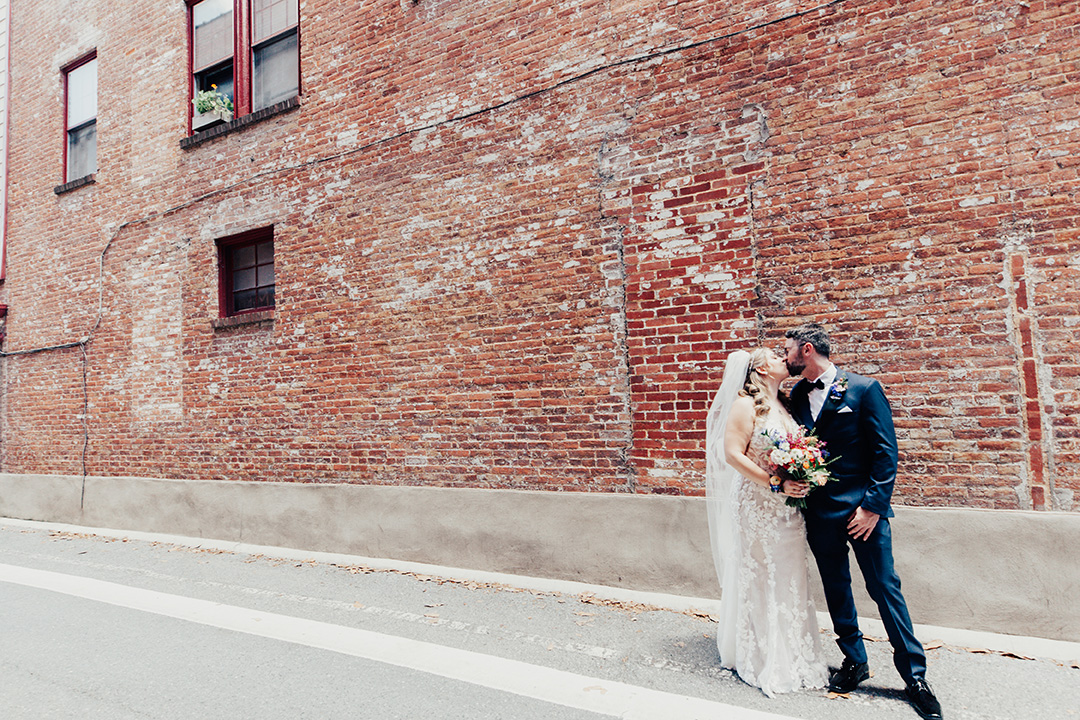
The streetscape itself is the first resource. Brick facades, painted storefronts, awnings, old signage, and the texture of a downtown that has been continuously occupied for a very long time. Late in the day, the low sun comes down the street corridors and gives us long directional light that we can use straight or filtered through the buildings.
Carroll Creek Park is the second, and it is the change of scenery most couples want — water, plantings, and the pedestrian bridges that cross it. It reads green and open in a way the downtown blocks do not, and it is a genuinely different environment within a short walk of the venue doors. It is also popular, so we plan around foot traffic and pick our angles rather than expecting the place to be empty.
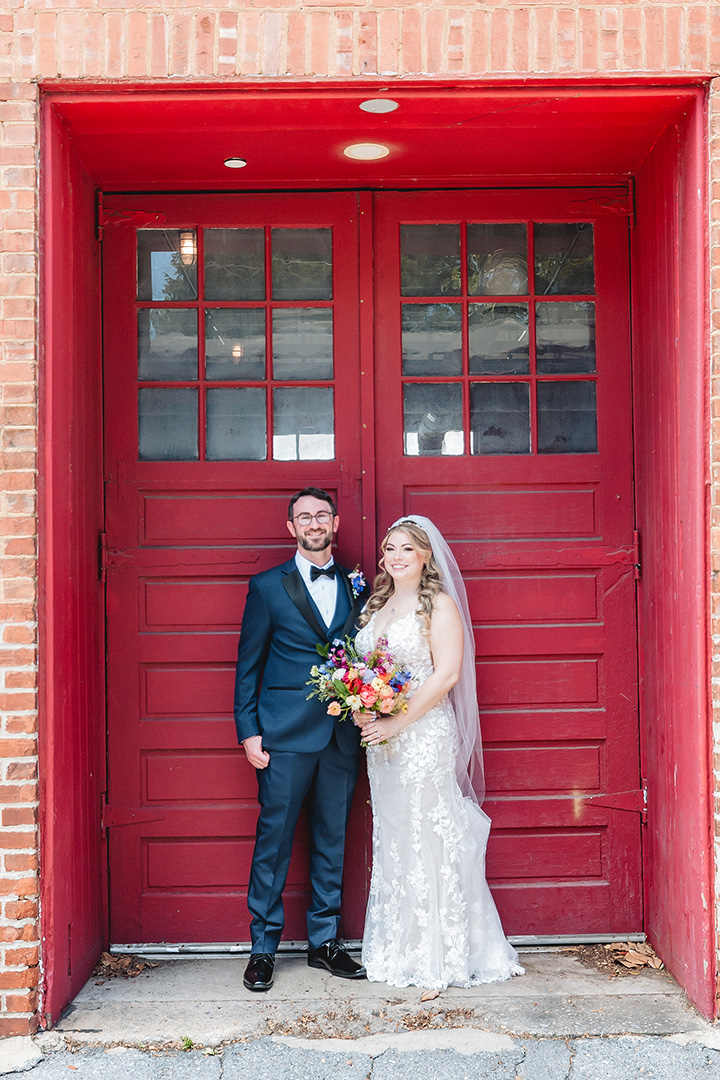
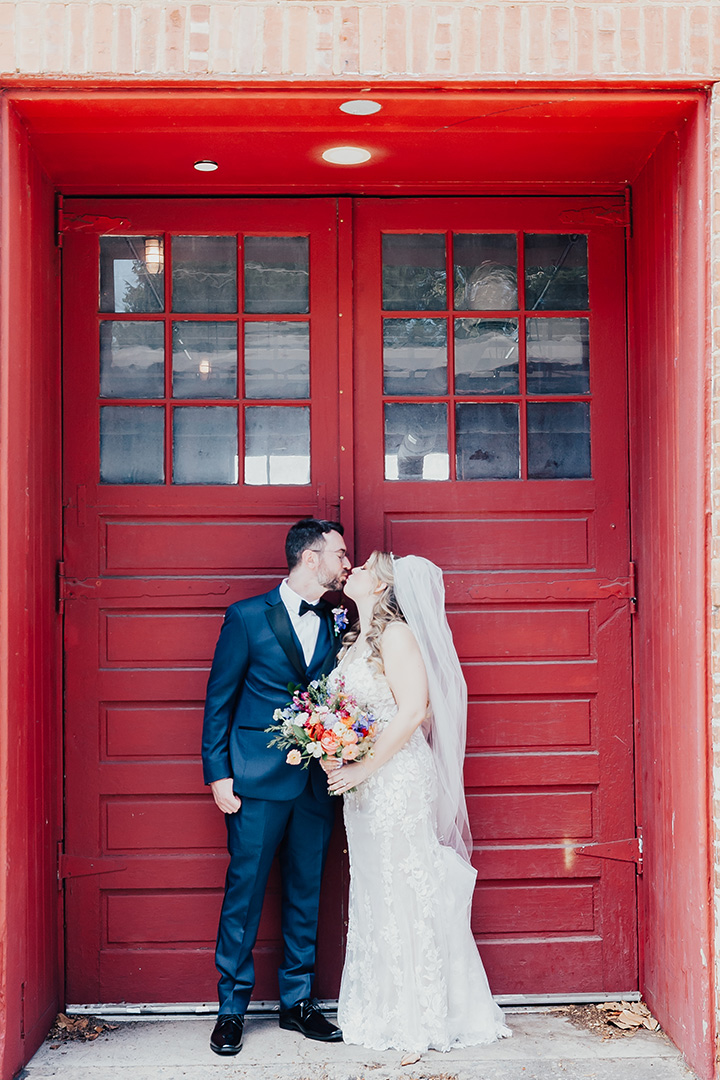
Then there are the small finds — alley entrances, service doors with peeling paint, iron railings, brick archways, the gaps between buildings where light does something unexpected. These are the frames we hunt for during a walk-through, and they change from year to year as businesses repaint and renovate. We usually scout the block the week of the wedding to see what is currently good.
And when the weather does not cooperate, nothing is lost. That is the quiet luxury of an indoor venue with this much interior character. Rain means we stay inside and shoot the vaults, the staircase, and the ceilings, and the resulting gallery is still full. We will also happily take you out under an umbrella for ten minutes if you are willing, because wet pavement at night reflecting streetlights and storefront glow makes for some of the best photographs we produce all year. But it is your call, and it is never a rescue operation.
Seasonal Considerations
Choosing a fully indoor venue removes the single largest source of wedding anxiety. There is no tent contingency, no rain plan that quietly ruins the layout you spent months on, no wind advisory, no heat index conversation with your caterer. The forecast becomes a question about your guests’ commute rather than about your ceremony. If you are the kind of person who will check a weather app forty times in the two weeks before your date, that peace of mind has real value.
That said, the season still shapes the day, mostly through light.
Winter is underrated here, and we would encourage you to consider it. The sun sets early, which sounds like a problem and is actually an opportunity: your entire reception happens after dark, downtown is lit up, and the interior warmth of the building reads beautifully against the cold blue outside. Winter dates also tend to have more availability across Frederick, MD wedding venues generally. The tradeoff is a short window for outdoor portraits — if you want daylight exterior frames in December or January, we will need to take them well before the ceremony.
Spring and fall are the peak seasons for a reason, and if you want an autumn Saturday, you should be talking to the venue a year or more out. The weather is comfortable enough that stepping outside for portraits is easy, the light lasts into a reasonable evening hour, and downtown is at its most pleasant for guests who want to wander between the ceremony and the reception. This is when a Frederick County wedding venue in a walkable downtown is at its absolute best.
Summer brings heat and humidity, and the practical impact is on your outdoor portrait time rather than on the event itself — inside stays comfortable. The upside is that sunset comes late, which means golden hour can fall during your reception, and stepping out for ten minutes at eight in the evening for warm, low, beautiful light is entirely doable. We build that into summer timelines when couples want it.
The broader point is that sunset time swings by several hours across the calendar in Maryland, and it drives your entire photography schedule. A five o’clock ceremony in June and a five o’clock ceremony in December are completely different days from our side of the camera. Once you have a date, tell us, and we will build the timeline backward from when the light is good rather than forward from when the venue opens.
What Makes a Wedding Here Different
If you have toured a handful of places in the area already, you have probably noticed that most of them are variations on a rural theme. Frederick County has beautiful farms, barns, and estates, and there is a reason couples love them. But they are all asking you to have a certain kind of wedding — outdoor-leaning, pastoral, weather-dependent, and usually reached by a drive.
This building offers the opposite proposition. It is urban, architectural, and entirely indoors. Your photographs will have stone and metal and marble in them rather than fields and fences. Your guests will arrive on a sidewalk. The aesthetic is closer to a city wedding than a country one, and for couples who have been quietly worried that their options were narrowing toward burlap and mason jars, that is a relief.
The second real difference is budgetary, and it is worth saying plainly. In a plain room, décor is not optional — you are paying to give the space a personality it does not have. Here, the personality is included. The ceilings, the vaults, the floor, and the doors are doing work that would otherwise cost you thousands in draping, lighting, and floral. Couples who choose a luxury wedding venue Frederick has in a building like this one often find they can spend less on making the room look like something and more on food, music, or photography. We have photographed weddings here with fairly modest décor budgets that looked extraordinary, because the couple let the architecture carry it.
The third difference is your guests’ experience, and it shows up in the photographs more than people expect. When the hotel is four blocks away, nobody leaves early to make a drive. When there are bars and restaurants on the same street, the after-party organizes itself. When guests can walk, they drink responsibly and stay late, and a dance floor that is still full at the end of the night is the difference between a good gallery and a great one. A Citizens Ballroom Frederick MD wedding puts your people inside a functioning downtown rather than at the end of a country road, and that changes the energy of the entire evening.
Add it up and you get a day that feels considered rather than assembled. The building supplies the gravity, downtown supplies the convenience and the character, and you supply the rest. If that combination sounds like the wedding you have been picturing, it is worth booking a tour and standing in the room yourself. Photographs — including ours — only get you part of the way there. The ceiling has to be over your head.